
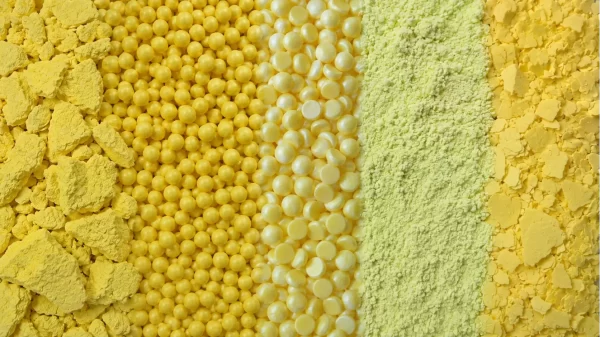
Sulfur is processed into fine powders for a range of industrial uses, but its physical characteristics make safety a central part of the grinding design. During size reduction and collection, friction, static charge and heat generation can create conditions that require careful control. Safety cannot be treated as an add-on after equipment selection; it must be built into the process flow.
One important principle is to limit oxygen within the grinding and collection system. A nitrogen circulation design can provide an inert process atmosphere, while controls monitor oxygen concentration and add nitrogen when required. Cooling is also important because it helps manage process temperature and reduces the risk of powder adhesion or thermal ignition.
The equipment package should be considered as a whole. Quantitative feeding, enclosed grinding, classification, collection, filtration, cooling and PLC controls all contribute to stable operation. Appropriate explosion-protection measures, anti-static components and pressure-relief arrangements should be selected according to the applicable local rules and the site-specific hazard assessment.
For operators, good housekeeping and preventive maintenance remain essential. Regular inspection of filters, seals, grounding and control instruments helps maintain the intended safety margin. A well-designed sulfur grinding line combines target particle size with continuous attention to atmosphere, temperature and dust control.